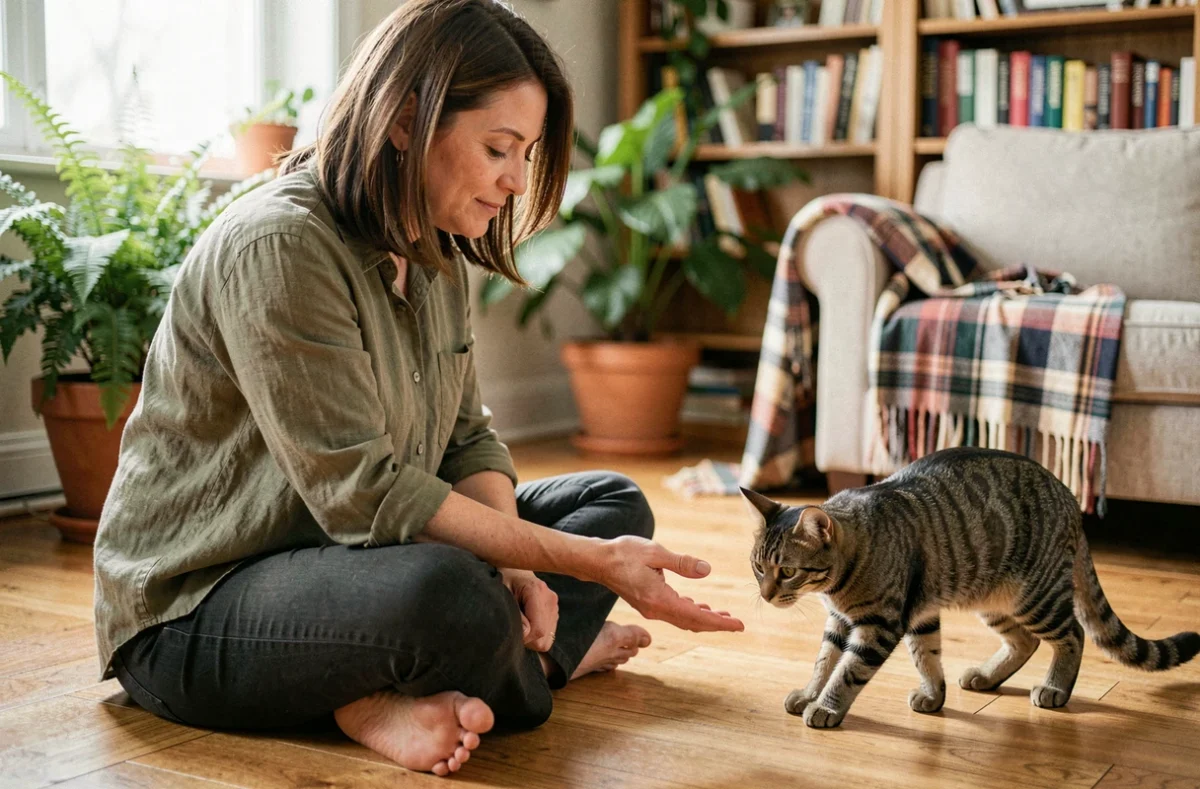
A cat squinting at you, a dog turning its head away when you pet it on the head: these subtle signals often go unnoticed. Understanding animals starts with learning to read what they express without making a sound. This awareness improves the quality of your relationship every day—for both of you.
A harmonious relationship doesn’t happen by decree: it’s built on a nuanced understanding of what the animal is actually experiencing during an interaction.
Signs of comfort and avoidance signals in dogs and cats
Have you ever noticed your cat licking its lips after a pet, even though it hasn’t eaten? This gesture often indicates discomfort. In dogs, a yawn when they’re not tired or turning their head away means the same thing: the animal is asking for a break from the interaction.
In cats, a slow blink (sometimes called a “cat kiss”) is a sign of relaxation. A cat that stares at you without blinking, on the other hand, may be feeling tense. Ears pointed forward indicate curiosity; ears flattened against the head indicate fear or irritation.
Dogs use a broader range of body language. A wagging tail doesn’t always mean happiness: a fast, stiff wag can signal anxious excitement. A relaxed posture is characterized by a loose body, a slightly open mouth, and weight evenly distributed across all four paws.
Several resources explain these behavioral signals across different species, such as https://lanimaletlhomme.fr, which explores the relationship between humans and different animal species.
- Relaxed cat: half-closed eyes, kneading paws, tail held upright with a curled tip, steady purring.
- Cat seeking distance: flattened ears, dilated pupils, swishing tail, quick lip-licking, leaning away.
- Comfortable dog: loose body, soft gaze, tail wagging at mid-height, open posture.
- Dog signaling discomfort: yawning, turning its head away, licking its nose, stiff body, visible whites of the eyes.

When an animal doesn’t want to interact: respect its need for space
It’s tempting to seek comfort from your pet after a difficult day—a cuddle with the cat, a long hug with the dog. The problem is that people’s need for contact doesn’t always match an animal’s willingness to interact.
A cat that gets up and walks away while you’re petting it is sending a clear message. Following it to continue the interaction means ignoring its communication. Repeating this pattern can undermine trust and make the animal more withdrawn over time.
In dogs, apparent submission (lying on their back, avoiding eye contact) is sometimes interpreted as an invitation for belly rubs. In some cases, it’s a calming signal: the dog is trying to avoid conflict, not asking for physical contact.
The consent test for petting
A simple method can help you check whether an animal enjoys being touched. Pet it for a few seconds, then withdraw your hand. If it comes back to you, moves closer, or nudges your hand with its head, it wants more. If it stays still, turns away, or moves off, it would rather be left alone. This test works with most dogs and cats.
Using it consistently changes the dynamic of the relationship. The animal learns that its signals are respected, which builds trust and, paradoxically, often makes it more likely to seek contact over time.
Changes in animal behavior: when to consult a veterinarian
A usually sociable cat that hides for several days, or a calm dog that suddenly growls when touched: these marked changes aren’t always due to a communication or training issue.
French law includes the diagnosis and treatment of behavioral disorders among veterinary medical procedures. Unusual, persistent behavior (sudden aggression, house-soiling in a previously house-trained animal, prolonged lethargy) may have a medical cause, such as chronic pain, a neurological disorder, or a hormonal imbalance.
Mistaking a health problem for a whim delays treatment. Before changing how you communicate with your pet or modifying its environment, a veterinary checkup can rule out a physical cause.

Matching the needs of the species to everyday life at home
Since January 1, 2025, a French decree has regulated training for people carrying out certain activities involving pets. The curriculum covers behavior, signs of stress, and ways to foster a harmonious relationship. This requirement reflects a simple fact: understanding an animal takes structured learning, not just good intentions.
French rules on acquiring animals emphasize that they must be kept in conditions compatible with their biological needs. For some species, buyers must sign a certificate confirming their knowledge of the animal’s specific needs. This document is more than an administrative formality: it lists practical requirements for space, food, and enrichment.
An indoor cat without access to high-up spaces or hunting toys will experience chronic stress that even the best communication cannot resolve. A working dog kept in a studio apartment without enough physical activity will develop behaviors its owner may describe as “difficult.”
Adapt the environment before trying to change the behavior
A suitable environment reduces most everyday tensions. For cats: scratching posts, elevated perches, and a litter box in a quiet spot. For dogs: regular walks, chew toys, and undisturbed rest periods.
A harmonious relationship with an animal doesn’t depend on a particular communication technique or a special gift for empathy. It comes down to three things: learning to read the signals the animal sends, accepting that there will be times when it doesn’t want to interact, and providing a living environment that meets its biological needs. The rest follows.