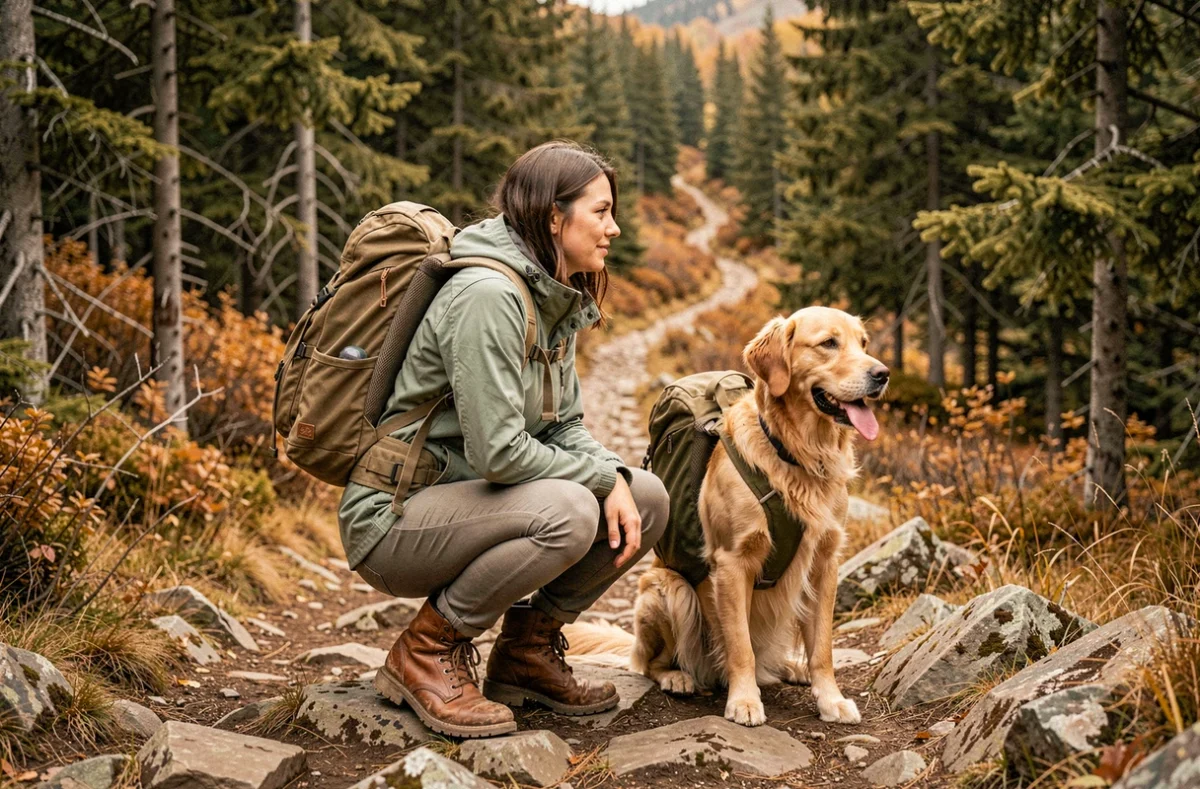
Spending two days in the mountains or forest with your dog means moving beyond a few-hour loop to a proper mini-trek with a bivouac or an overnight stay along the way. The difference isn’t the number of miles. It’s whether you can ensure legal access, water sources, and a backup option in case something goes wrong on every section of the route.
When to skip an overnight trek with your dog
Before planning a two-day route, the first question isn’t “How many miles can my dog walk?” It’s: Can you legally camp outdoors with a dog along the route? The two rules—dog access and bivouacking—must be checked separately, as one does not guarantee the other.
For example, dogs on a leash are allowed in the core area of Cévennes National Park, but bivouacking there is subject to specific times and designated locations. By contrast, dogs are prohibited from the core areas of Vanoise, Écrins, Mercantour, and the Pyrenees national parks, with some exceptions. So just because a trail is suitable for your companion doesn’t mean you can pitch a tent there.
If you find a section with no reliable water source for several hours of walking, or no backup accommodation (a gîte or refuge that accepts pets) within a reasonable distance of the route, it’s better to choose a base-camp loop instead. The Amazing Pet Place guide to hiking with a dog explains this format, which sits between a day walk and a demanding trek.
Skip the overnight trek if even one section lacks water, legal access, or a backup option. A weekend based at one location, with two day hikes from the same starting point, still counts as a mini-trek: your dog covers plenty of miles and sleeps somewhere suitable.
Getting your dog ready for two consecutive days of hiking
Have you noticed how your dog runs around during a three-hour outing, then sleeps all afternoon? Over a weekend, that fatigue builds up. On the second morning, an unprepared dog may refuse to set off again or start limping on rocky ground.
Build up gradually
Two to three months before your weekend away, gradually extend your usual outings. Move from one-hour walks to hikes of three, then four hours, adding elevation gain if your route includes it. The goal isn’t simply to cover more ground, but to build endurance over two consecutive days.
Schedule a recovery week every three weeks. Keep an eye on your dog’s paw pads: abrasive surfaces such as shale and scree wear them down much faster than forest trails. If the pads are still tender after a month of training, consider protective booties for the trek.
Food and water for a two-day hike
An active hiking dog needs significantly more calories than one at rest. Kibble is the easiest option to carry: compact, lightweight, and already familiar to your dog.
- Split meals into three servings a day (morning, midday break, and evening) to help prevent bloat, which is common in large dogs that eat quickly after exercise
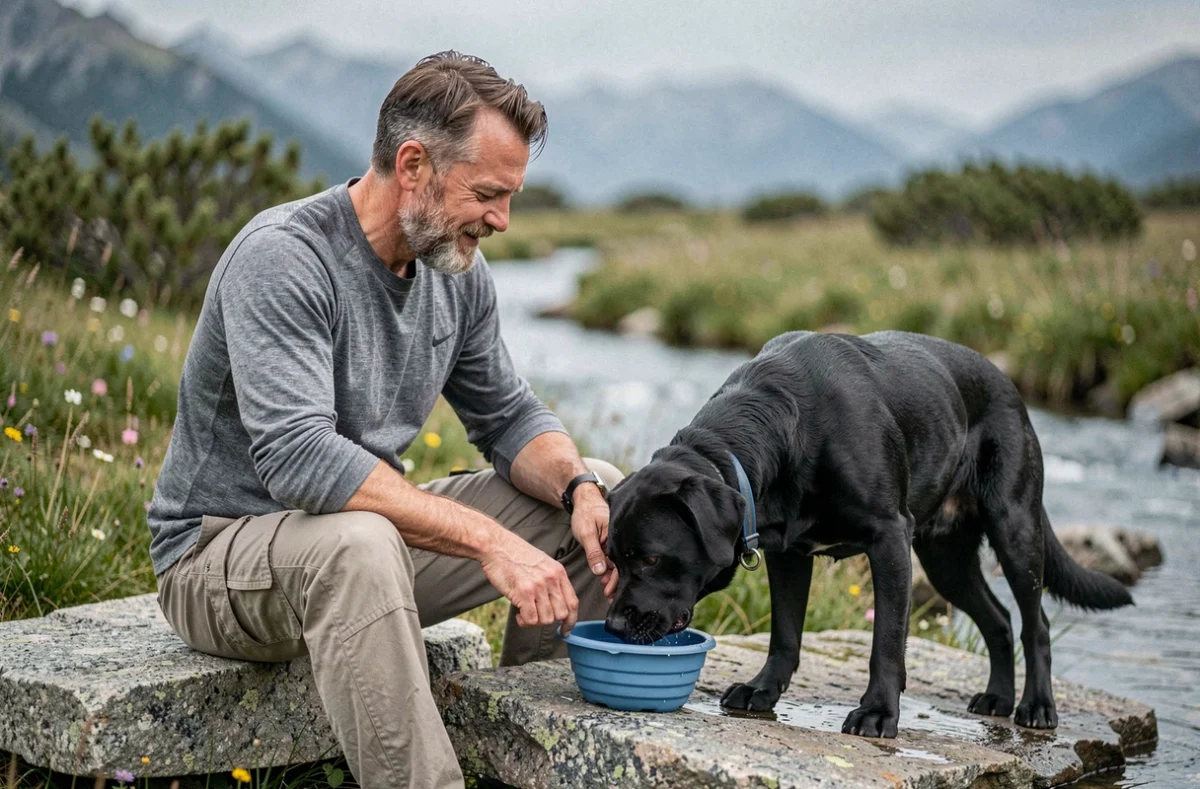
- Bring a collapsible bowl and offer water every half hour, more often in hot weather or at altitude
- Mark springs and streams on your map before setting off: if a section has no water for more than two hours, bring an extra liter for your dog
Parasites and health risks depending on your trek destination
Ticks aren’t the only concern. In southern France, sand flies can transmit canine leishmaniasis. These insects are active from dusk until dawn, right when you’re bivouacking. Not all parasite treatments repel them: a standard flea and tick treatment may leave your dog exposed.
Before a weekend in the great outdoors, consult your vet and tell them where you’re going and what time of year. They can tailor parasite prevention to the exact location of your trek.
- In Mediterranean areas (garrigue and maquis), ask about a repellent that works against sand flies in addition to tick treatment
- In the mountains above the tree line, the risk of sand flies decreases, but ticks are still found in alpine pastures
- After the weekend, check your dog’s coat and ears within 24 hours, and watch for any unusual fatigue during the following week
Trek gear for hikers and their dogs
Your backpack fills up quickly when you add your dog’s gear. Why list everything? Because forgetting something on a weekend with no shops nearby can turn an adventure into a hassle.
What your dog can carry
A dog pack lets your dog carry its kibble and bowl. The load should be no more than one-tenth to one-fifth of your dog’s body weight, depending on its fitness and the length of the trip. Get your dog used to the pack during training hikes, not on departure day.
What to carry for your dog
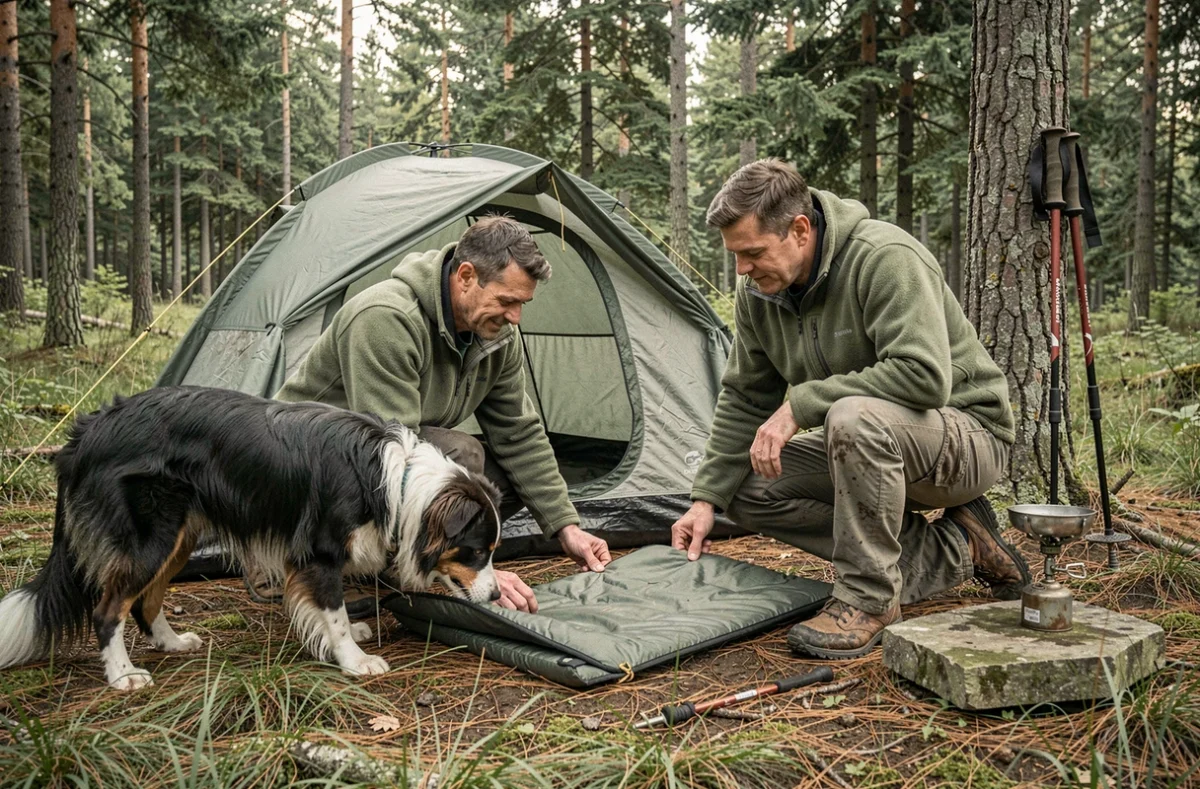
A 3- to 5-meter long line offers a good balance between freedom and control on narrow trails. Add a lightweight blanket if you’re bivouacking at altitude: your dog loses heat to the ground overnight, even in summer. Also bring a canine first-aid kit with gauze, disinfectant, and a tick remover.
It’s worth giving your tent choice some thought. An open vestibule lets your dog sleep under cover without entering the sleeping area. If you’re staying in a gîte, check that pets are allowed when you book—not the night before you leave.
Choosing a weekend route that suits your dog
Each nature reserve has its own rules on dog access, which may differ from those of the national park it lies within. Check the regulations for every protected area you’ll cross, not just those at your starting point.
Choose a route with shorter alternatives. If your dog gets tired midway through the second day, a marked shortcut means you won’t have to push on. A good mini-trek route with a dog always includes an option to cut the hike short.
Terrain matters just as much as distance. A shaded forest trail on soft ground is much easier on your dog’s paws than an exposed ridge with rocky slabs, even over the same distance. For your first weekend away, a mid-altitude mountain range with plenty of forest offers the best balance of new scenery and comfort for your dog.
The transition from a simple out-and-back to a proper mini-trek depends less on the miles than on how well you plan the route. A route checked for legal access, with water sources along the way and a backup plan, turns two days of hiking into a shared adventure without any nasty surprises.