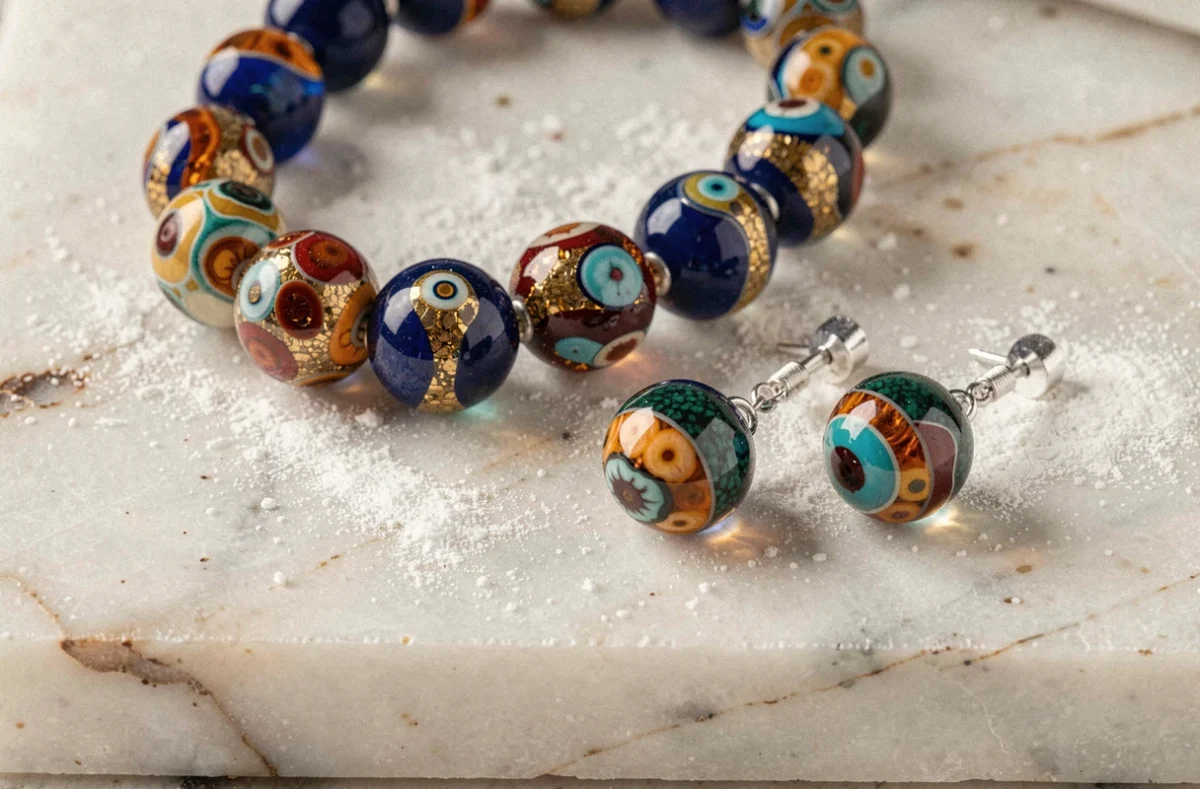
When buying a piece of jewelry described as Murano glass, two things are often uncertain: whether the glass was actually blown on the island, and the exact composition of the metals used in the clasp or hook. These are separate matters, and confusing them can lead to disappointment, whether aesthetic or dermatological.
Glass origin and findings composition: two separate guarantees
The collective mark Vetro Artistico Murano, established by a regional law in 1994, is reserved for authorized businesses on the island. It certifies the glass’s geographical origin and that it was made in a recognized Murano workshop.
The mark does not cover the jewelry’s metal components: earring hooks, bracelet clasps, or pendant bails. A necklace made with authentic Murano glass may therefore be assembled using findings whose alloy composition is unknown to the buyer.
For people sensitive to nickel or other metals, it is worth asking separately about the composition of the findings. A reputable seller should be able to say whether the clasps are made of 925 sterling silver, stainless steel, or plated alloy. On muranobijoux.fr, this information is included in the product descriptions, allowing buyers to check both the glass and the setting before making a purchase.
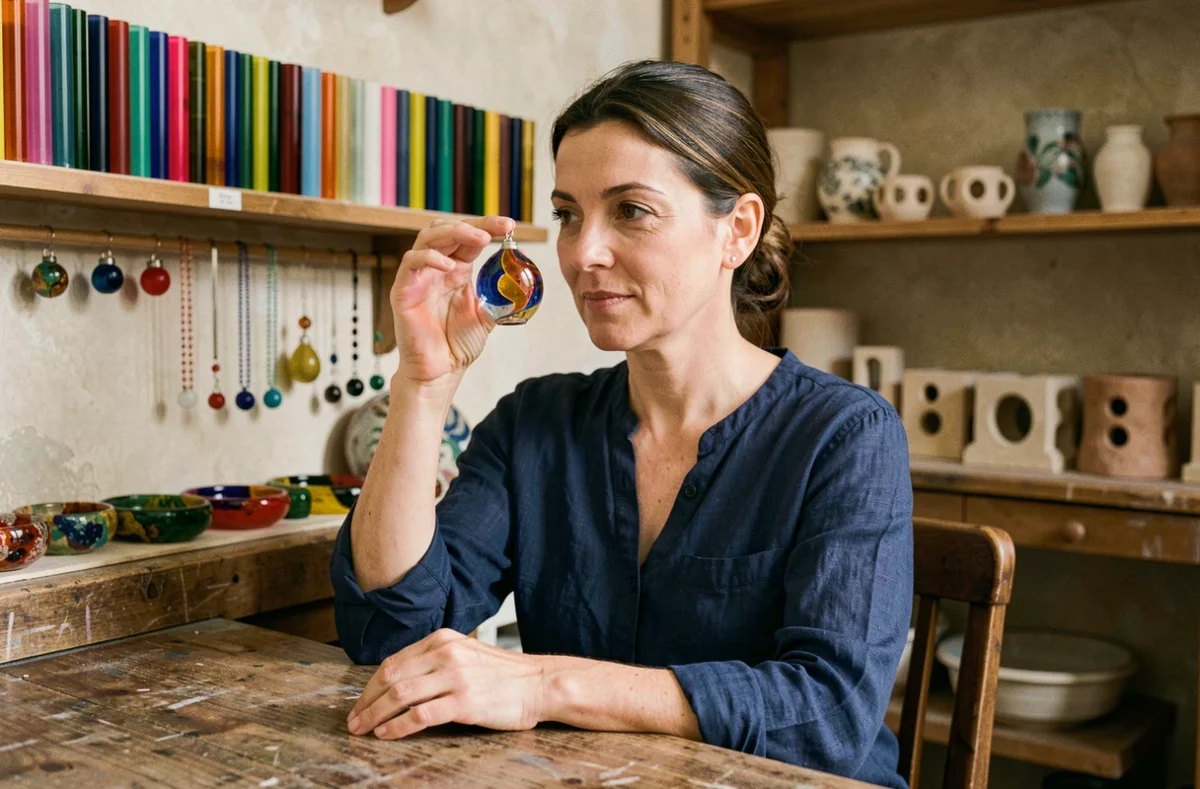
Vetro Artistico Murano mark: what it covers and what it does not
| Aspect of the jewelry | Covered by the mark | Not covered by the mark |
|---|---|---|
| Glass origin | Certified as made on the island of Murano | – |
| Glassmaking technique | Artisanal expertise of authorized workshops | – |
| Metal findings (clasps, hooks) | – | Composition, origin, surface treatment |
| Unlabeled jewelry | – | Origin must be established through an invoice or workshop name |
The absence of a mark alone is not enough to conclude that a piece of jewelry is an imitation. Some Murano glassmakers do not use the collective mark. For an unlabeled piece, its origin must be substantiated in another way, for example by providing the workshop’s name and a detailed invoice, rather than inferred from the piece’s appearance alone.
European protection for artisanal products in progress
European Regulation 2023/2411 establishes a framework for protecting geographical indications for artisanal and industrial products. Italy has begun a national process toward an application concerning Murano glass. The precise status of this application should be checked against the current European register, but the prospect of stronger geographical protection at European level would be a step forward for buyers seeking guarantees of origin.
Necklaces, bracelets, earrings: what to look for in Murano glass jewelry
The type of jewelry determines what to check. A pendant is subject to little mechanical stress, while a bracelet takes repeated knocks against a desk or keyboard. Murano glass is durable, but it is still glass.
- For a Murano glass bracelet, choose beads strung on coated steel cable rather than flexible thread to reduce wear from friction and prevent breakage
- For earrings, check the weight of the bead: a blown (hollow) bead will be lighter than a solid one, reducing strain on the earlobe
- For a necklace or pendant, the bail (the connector between the glass and the chain) should be soldered or screwed in place, not simply glued
- For a matching set, make sure the pieces come from the same workshop to ensure consistent coloring, as each furnace produces slightly different shades
Glassmaking techniques and visual effects
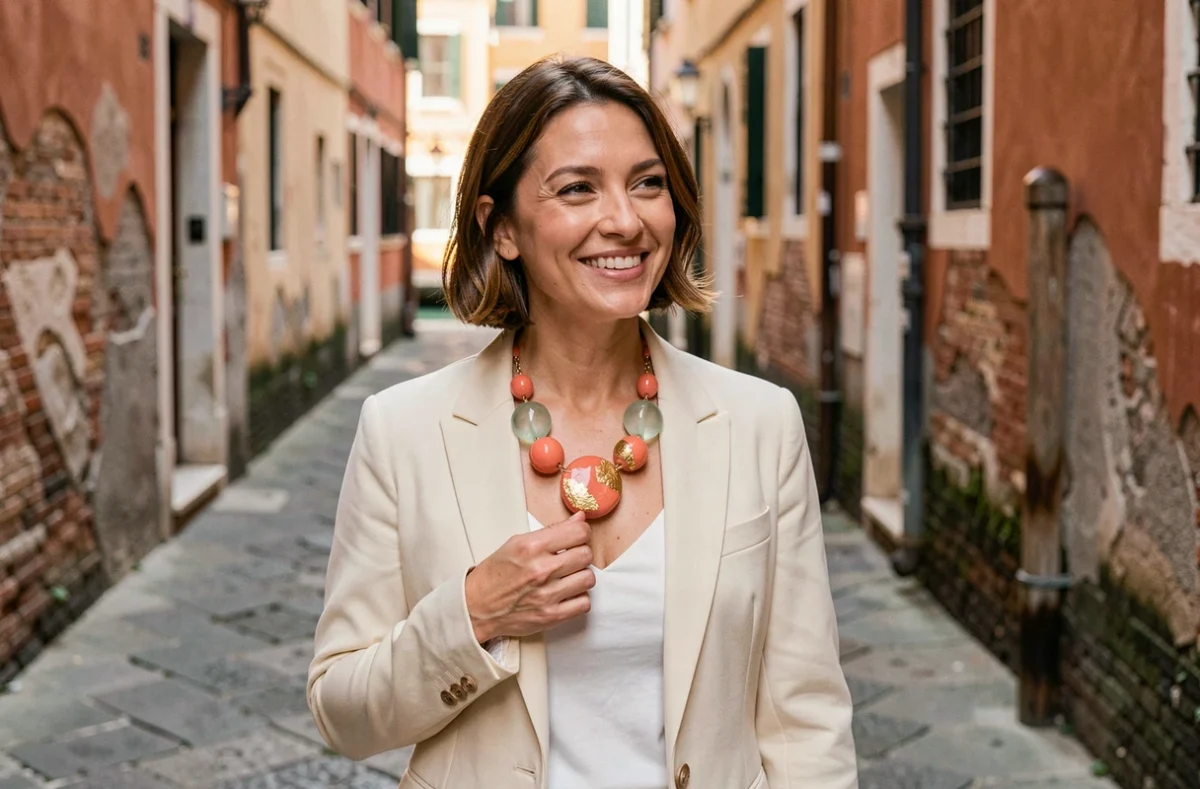
The techniques used directly influence a piece of jewelry’s design. The millefiori (thousand flowers) technique creates distinctive floral patterns from thin rods of colored glass that are sliced and fused together. Gold or silver leaf inserted between two layers of clear glass creates the luminous depth characteristic of Venetian pieces.
Aventurine glass, meanwhile, contains copper flecks that create a natural shimmer. These variations are not merely cosmetic: they result from distinct processes, each requiring specific expertise in furnace work and cooling times.
Murano glass jewelry prices: understanding the differences
Prices can vary considerably between two pieces of jewelry described as “Murano.” The price primarily reflects the time spent working with a torch or furnace, followed by the rarity of the technique used.
A blown-glass pendant with gold leaf inclusions requires more steps than a molded, monochrome bead. The price difference between the two is logical and verifiable: simply ask the seller for details of the process.
Jewelry sold at very low prices on general marketplaces raises questions about its true origin. An unusually low price for a product advertised as handmade and made in Murano should be a warning sign. Without an invoice, a workshop name, or a reference to the Vetro Artistico Murano mark, traceability cannot be established.
Buying from a specialist retailer that names its suppliers and explains the techniques used remains the most reliable way to ensure authenticity. The price then becomes not an extra expense, but a verifiable reflection of craftsmanship rooted on an island in the Venetian Lagoon.