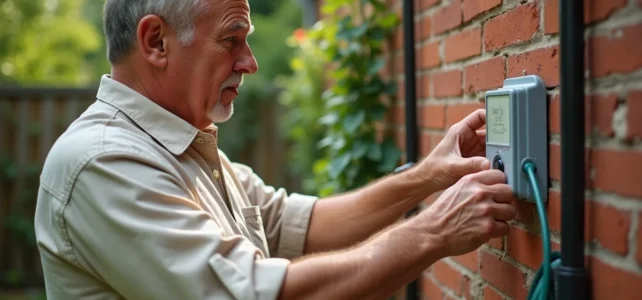
The battery of a sprinkler timer does more than just display the time on a screen. In faucet models, it directly operates the solenoid valve that opens and closes the water flow. When it weakens, the risk is not limited to a delayed program: the valve can remain stuck in the open position or, in newer devices, lock in the closed position for safety.
Understanding what distinguishes the different types of power supplies allows you to anticipate the right time to change the batteries of the timer before a malfunction jeopardizes the garden watering.
Driving battery or backup battery: two roles, two replacement frequencies
Not all timers use their batteries in the same way. This distinction determines the actual replacement frequency, much more than the brand or price of the device.
| Type of timer | Role of the battery | Common battery type | Replacement frequency |
|---|---|---|---|
| Faucet (tap nose) | Powers the solenoid valve and electronics | AA alkaline (1.5 V) | One to two seasons depending on cycle frequency |
| Wall / 230 V mains | Memory backup and control panel off mains | 9 V alkaline battery | Annual or multi-year |
| Connected Wi-Fi/Bluetooth on faucet | Powers valve, radio module, and electronics | AA alkaline (1.5 V) | Often less than a full season |
On a wall-mounted timer connected to the mains, the 9 V battery is only used to retain the programs in case of a power outage. The solenoid valve operates on mains power. Therefore, the replacement of this battery can wait several years without affecting daily watering.
In contrast, a faucet timer uses its AA batteries every time the valve opens and closes. The more frequent the cycles (multiple zones, twice-daily watering), the faster the consumption increases. Connected models add the consumption of the radio module, which further reduces autonomy.
Alkaline or rechargeable batteries: actual compatibility of sprinkler timers
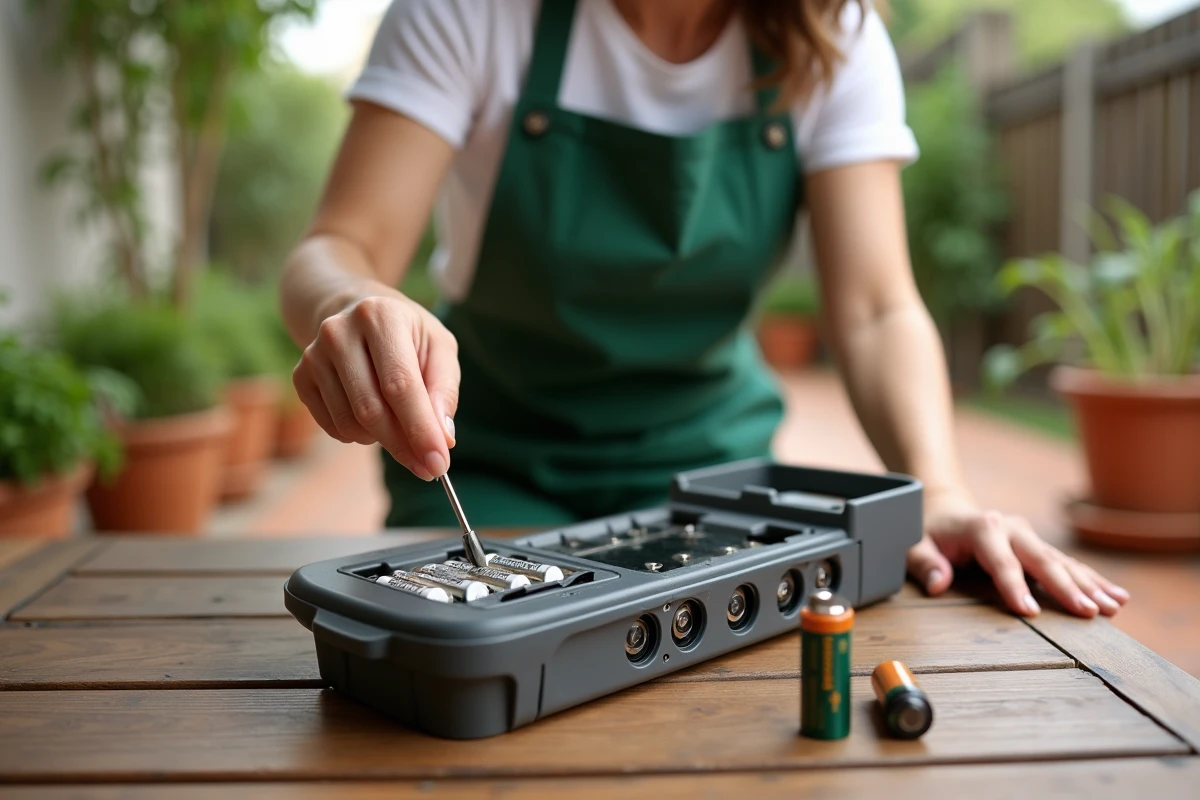
The temptation to use rechargeable batteries (NiMH) in a faucet timer is economically logical. In practice, recent timers are designed for 1.5 V alkaline batteries and may malfunction with rechargeables.
The reason is technical. A NiMH battery delivers a nominal voltage of 1.2 V, resulting in a lower total voltage in the compartment. The “low battery” detection threshold is calibrated for alkalines: with rechargeables, the device may signal an empty battery when it still has capacity, or conversely, not trigger the alert early enough.
- Alkaline batteries maintain a stable voltage for most of their life, then drop quickly at the end of the cycle, making it easier to detect the critical threshold.
- NiMH batteries have a flatter discharge curve: the voltage remains close to 1.2 V for a long time, then collapses suddenly, which can trap the timer’s electronics.
- Lithium batteries (1.5 V) offer better temperature stability and a longer lifespan, but their cost is significantly higher. They are relevant in regions where the timer is exposed to high summer heat.
For a connected timer, compatibility with rechargeable batteries must be checked in the manual before any use. An intermittent radio malfunction is often the first sign of an unsuitable power supply.
End-of-life battery safety: what recent timers do
A timer whose batteries die in the middle of a watering cycle poses a concrete problem: the valve may remain open. On a drip system, the damage remains limited. On a surface sprinkler, a faucet that runs all night can waste several hundred liters of water.
Several manufacturers now integrate a end-of-life battery safety function. When the level drops below a predefined threshold, the valve automatically closes. The screen or an indicator signals the battery status. This function prevents flooding scenarios, but it also interrupts watering: plants no longer receive water until the batteries are replaced.
On models without this safety feature (often entry-level), the risk of the valve being stuck in the open position is real. This is a criterion not to be overlooked when purchasing, especially for prolonged absences in summer.
Concrete signs of wear and battery replacement schedule
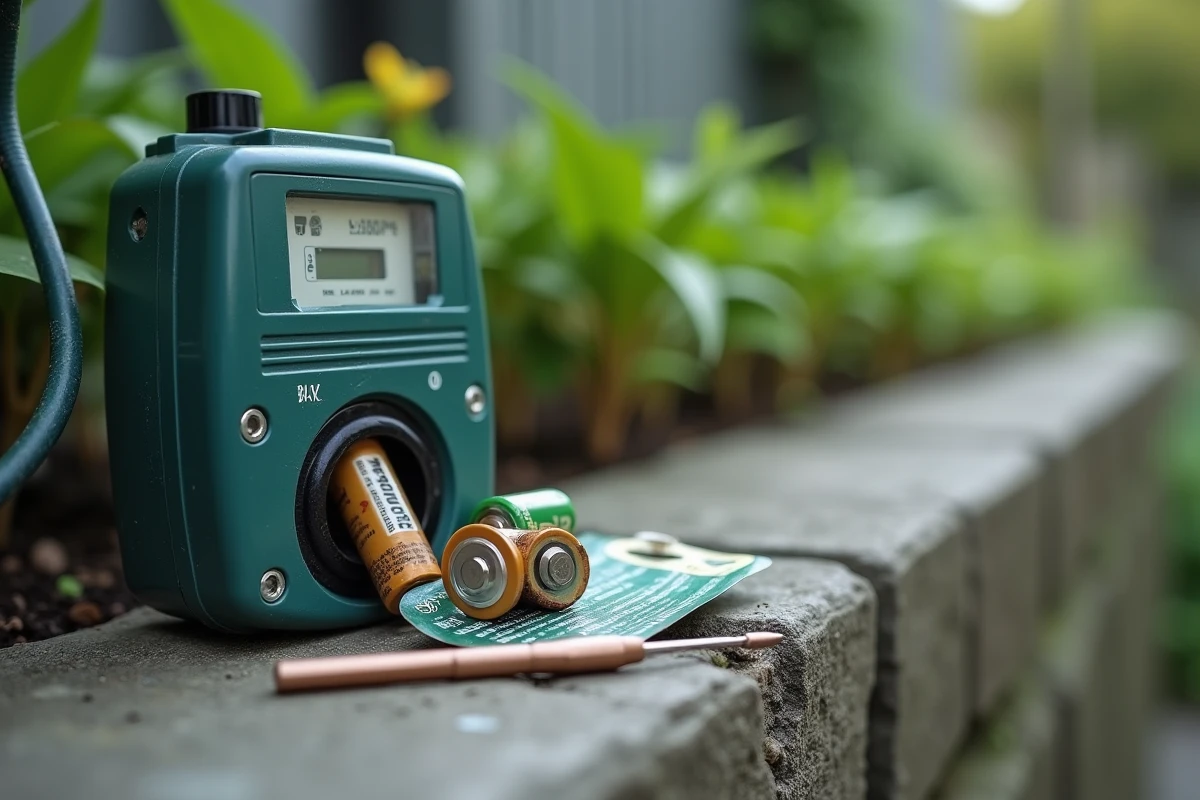
Waiting for the screen to turn off to replace the batteries is like waiting for a breakdown. Several signs appear beforehand:
- The LCD screen loses contrast or displays incomplete segments. On some models, a battery symbol blinks.
- The valve takes longer to open or close, sometimes producing an unusual clicking noise.
- On a connected timer, the Bluetooth or Wi-Fi connection becomes unstable: the app can no longer find the device or takes several attempts to connect.
- Recorded programs reset for no apparent reason.
In the absence of these signs, a systematic replacement at the beginning of the watering season (April-May in temperate climates) remains the most reliable method. For systems used year-round (greenhouse, Mediterranean climate), a second replacement mid-season is prudent.
Precautions during replacement
Removing the used batteries from a faucet timer should take no more than a few minutes, but two precautions can avoid inconveniences. Turning off the water supply before opening the battery compartment protects against accidental valve opening. Replacing all batteries at the same time (never mixing new and used batteries, nor different brands) ensures a uniform voltage in the compartment.
On a wall-mounted timer with a 9 V backup battery, noting the programs before replacement is unnecessary if the mains power remains connected: the memory is maintained by the main power supply. The battery only becomes critical during a simultaneous power outage.
The cost of AA alkaline batteries remains marginal compared to the price of a timer or the water waste caused by a failure. Replacing the batteries at the beginning of the season costs less than a single uncontrolled watering overnight.