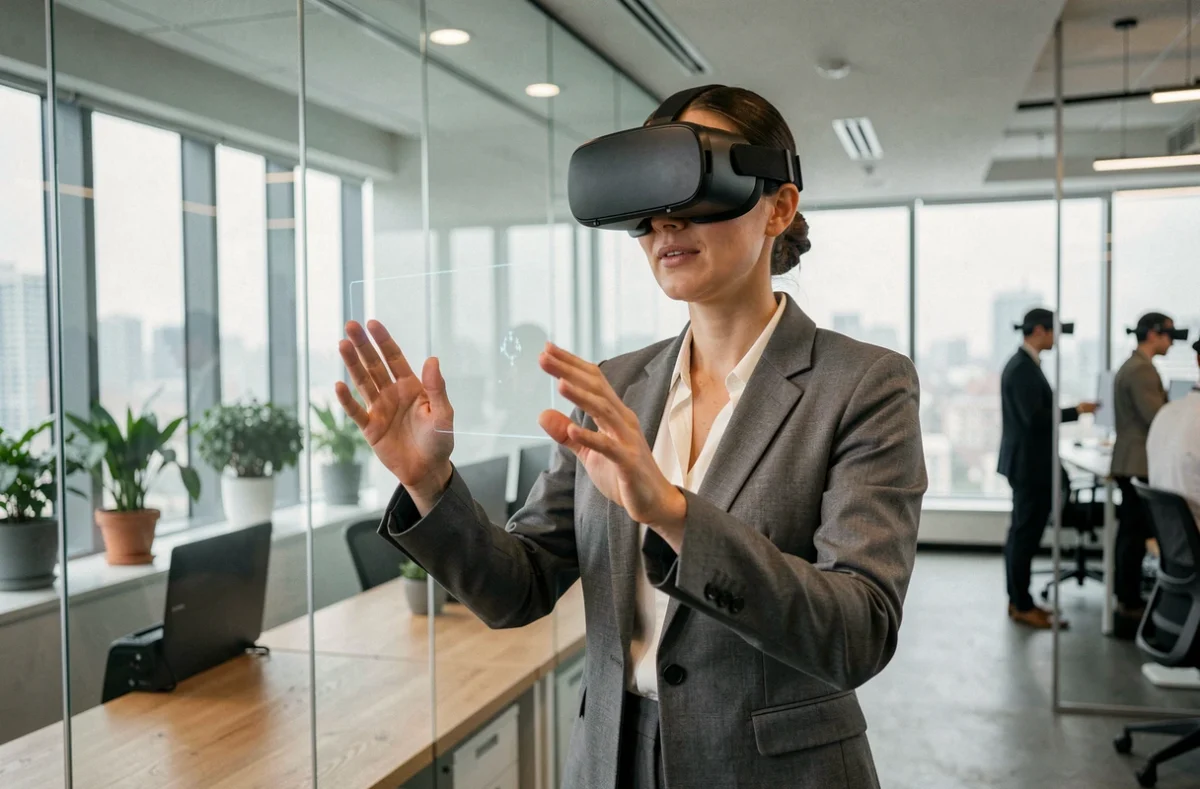
The virtual reality applied to professional training is based on a precise technical principle: immersing a learner in a three-dimensional digital environment where they can manipulate objects, make decisions, and repeat actions without material consequences. This technology is not limited to displaying a 360-degree scene. Its effectiveness depends on the actual degree of interactivity of the device, a parameter that many deployments underestimate.
Interactivity and skill transfer: what recent research distinguishes
A systematic review published in 2024, covering about thirty studies (synthesis by Conrad, Kablitz, and Schumann), establishes a clear distinction. Immersive devices show a significant advantage in learning when the learner manipulates, constructs, or makes decisions in the virtual environment. In contrast, a passive 360-degree video provides only limited benefits compared to a traditional screen.
This distinction changes the way a virtual reality training program is conceived. Simply reproducing a workstation is not enough. The educational scenario must impose actions, choices, and possible mistakes for immersion to translate into lasting learning.
Specialized structures assist companies in designing these interactive environments, as shown on the page: https://www.immersivelab.fr/, which details various applications of immersive simulation for technical professions and safety.
Virtual reality and safety training: the role of the right to make mistakes
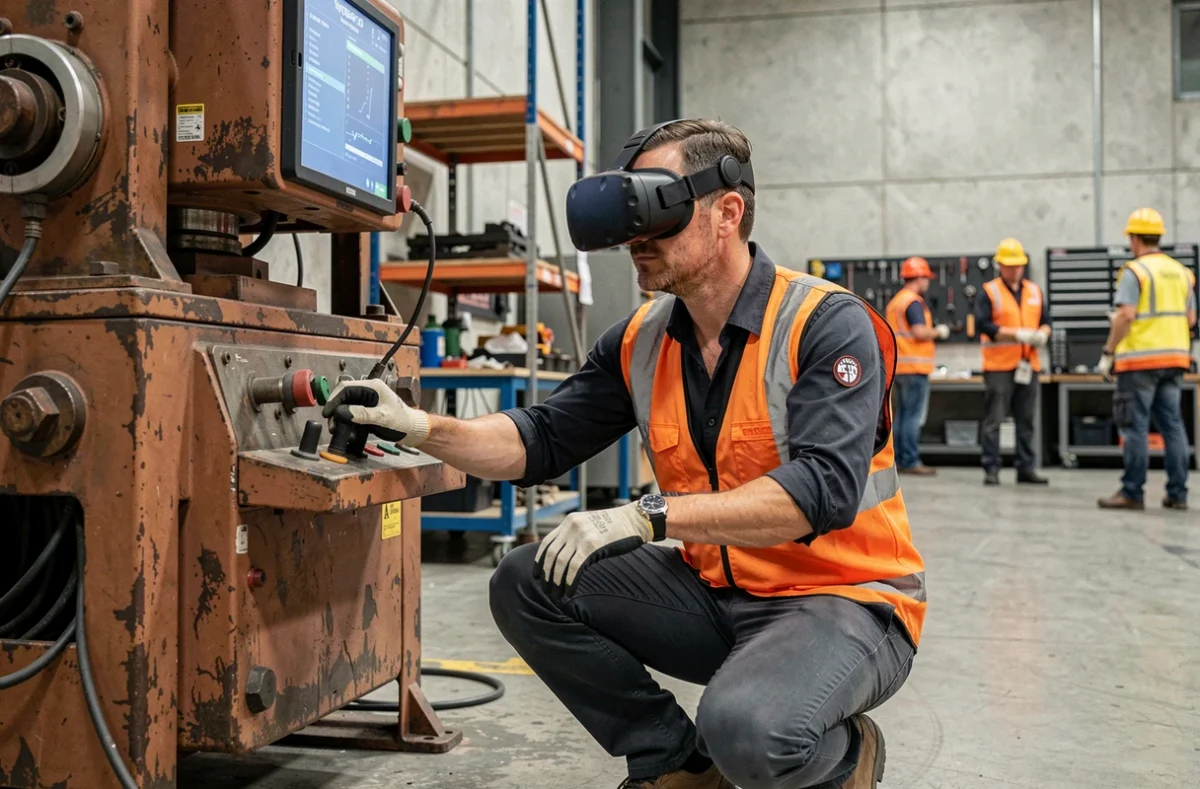
One of the most concrete contributions of VR concerns high-risk professions. Training an operator on an industrial line or a firefighter facing a building fire without physical danger represents a clear gain.
The pedagogical mechanism relies on the right to make mistakes in a controlled environment. The learner can trigger a mishap, observe its simulated consequences, and then try again. This trial-error-correction cycle, difficult to reproduce on a real site for cost and safety reasons, promotes the anchoring of good reflexes.
Limits on transfer in real situations
Published evaluations most often measure learner satisfaction and the acquisition of declarative knowledge. Data on long-term organizational effects, such as the actual reduction of incidents in the field, remain much less documented according to a publication in the International Journal of Nursing Studies released in 2024.
Measuring the actual transfer of skills remains the weak link in most programs. A good score in simulation does not guarantee a lasting change in behavior at the workplace. Organizations that make the best use of VR integrate a structured debriefing protocol after each session, followed by field monitoring over several months.
Physical risks and supervision: what the European agency reports
The European Agency for Safety and Health at Work identifies several specific risks associated with prolonged use of immersive headsets:
- The simulator sickness (cybersickness), caused by a mismatch between visually perceived movements and those felt by the inner ear, which affects a notable proportion of users during the first sessions.
- The risks of collision or falling in the surrounding physical space when the practice area is poorly defined or too restricted.
These constraints require adapting the duration of sessions, planning regular breaks, and training supervisors to recognize warning signals. Integrating VR into a training program is not just about purchasing equipment: the ergonomic design of the course conditions the safety of learners.
Design of tool replicas: an underestimated technical lock
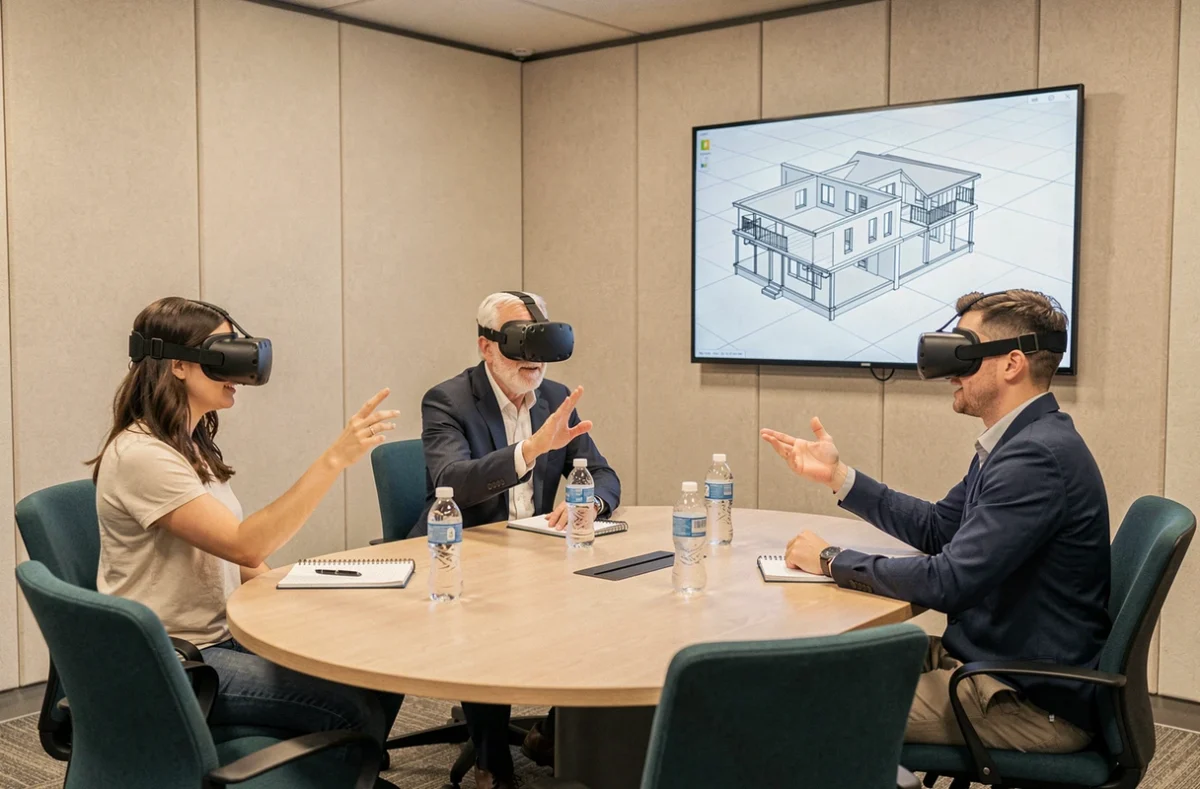
For gesture-based training (surgery, welding, industrial painting), the fidelity of the tool manipulated in the virtual environment poses a concrete problem. Julien Cauquis, a PhD student at IMT Atlantique, is working on this question: should the tool be reproduced identically or should one settle for an instrumented replica, equipped with sensors and control buttons?
The shape, weight, and material of the replica influence the quality of gesture transfer. The realism of the physical interface is as important as the graphical quality of the virtual scene.
Identified applications and perspectives
The sectors where interactive VR shows the most convincing results share a common trait: high-stakes technical gestures that are difficult to replicate in real conditions. Surgery, precision craftsmanship, and industrial maintenance are among the fields where research documents measurable learning gains.
Virtual reality in professional training produces tangible results when three conditions are met: a truly interactive scenario, monitoring of transfer in the field, and rigorous management of ergonomic constraints. Without these three pillars, the headset remains an expensive gadget sitting on a shelf.