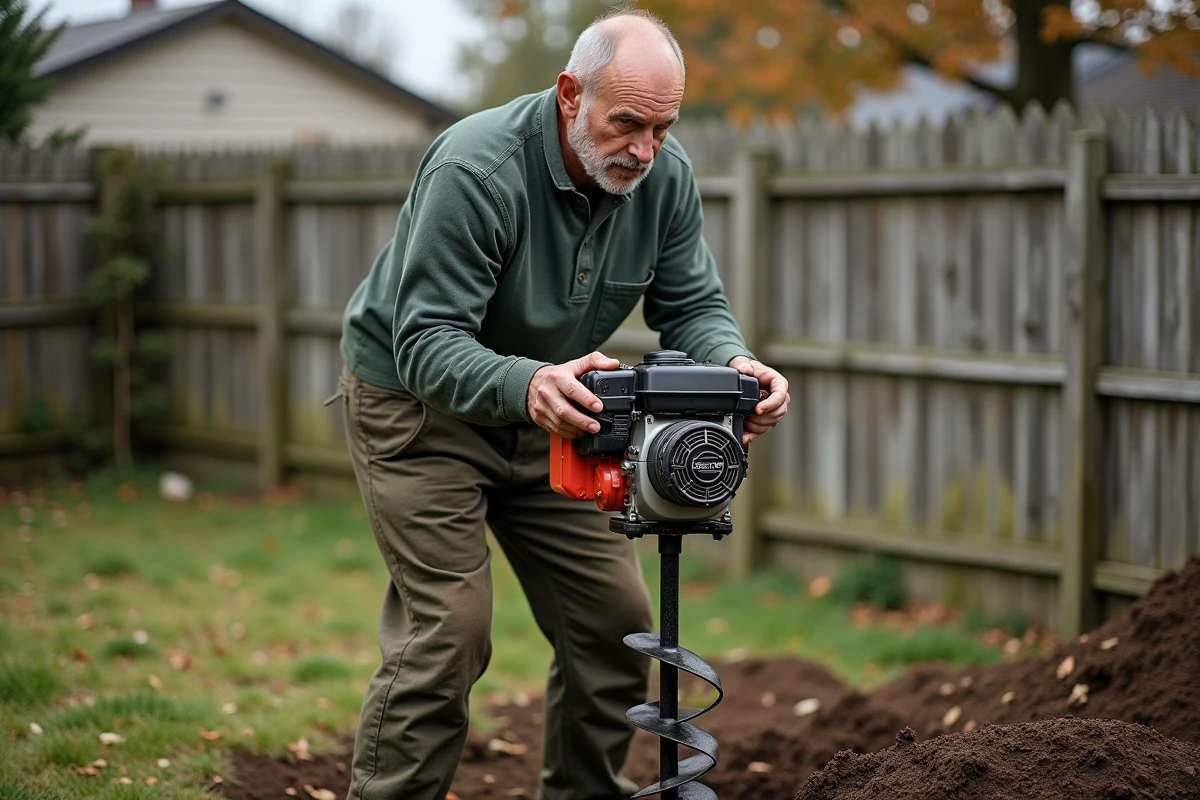
A thermal auger is first chosen based on its clutch and its ability to handle heavy soils. The engine displacement listed on the product sheet does not tell the whole story: premature wear on wet clay, compatibility with new regulatory requirements, and the shaft architecture that affects slope stability are equally important.
Horizontal or vertical shaft: stability of the thermal auger on sloped terrain
Comparative tests published in early 2026 by the magazine L’Ami de la Terre confirm what landscape professionals have been observing for several seasons: horizontal shaft augers offer significantly greater stability on sloped terrain. The lower rotation axis, closer to the operator’s center of gravity, reduces the torque effect that causes the machine to pivot when it encounters a root or a stone.
On flat and loose terrain, the difference remains marginal. However, as soon as the slope exceeds a few degrees or the soil mixes stones and compacted clay, the horizontal shaft configuration limits the risk of wrist twisting. We recommend this architecture for installing fence posts in hilly rural areas.
To compare available models based on this criterion and other technical specifications, the detailed sheets on tariere-thermique.com allow filtering by shaft type and displacement.
Clutch and clay soils: the weak point of 50-60 cm³ augers
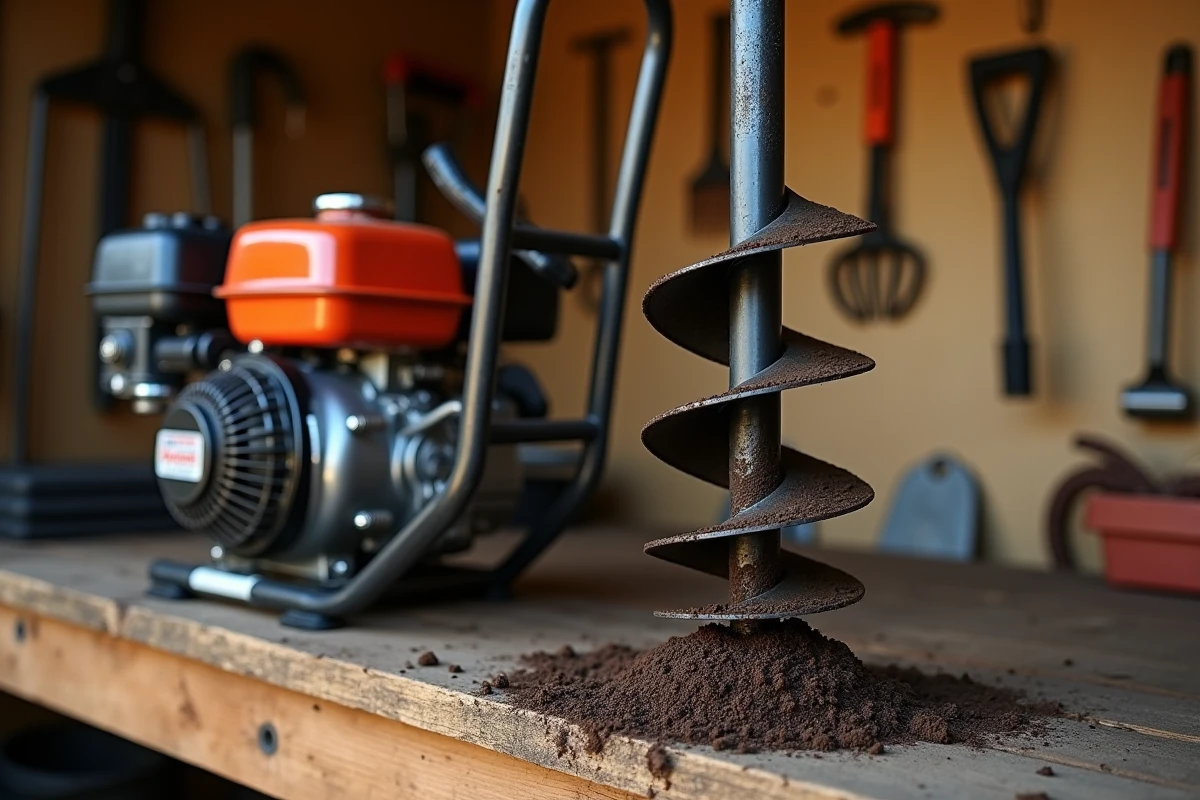
The centrifugal clutch is the part that suffers the most on a thermal auger used in wet clay soil. Aggregated feedback on the Webagri forum points in the same direction: premature wear of the clutch linings on 50 to 60 cm³ models used in these conditions.
Clay sticks to the bit, increases the resisting torque, and causes repeated jolts on the clutch. The most effective solution remains weekly lubrication of the clutch bell and the output shaft bearing. On a fence installation site in heavy terrain, this action adds a few minutes of maintenance but significantly extends the lifespan of the transmission.
Signs of wear to watch for
- Bit slipping at the start of drilling while the engine revs normally, indicating that the linings no longer transmit torque
- Unusual friction smell after drilling a deep hole in compact soil, indicating overheating of the bell
- Increased vibrations at the handles, often related to excessive play in the output shaft bearing
A replacement clutch costs a fraction of the machine’s price. We observe that many occasional users overlook this wear part until complete failure, while an annual visual inspection is enough to anticipate the problem.
Anti-vibration standards 2026: adapting a thermal auger for professional rental
Since 2026, thermal augers intended for professional rental must comply with enhanced anti-vibration thresholds. This requirement applies to rental companies, as well as any professional providing equipment on site. This regulatory aspect affects the compliance of an existing fleet and should be checked before any rental.
Adapting an already operational auger involves three targeted interventions:
- Replacing the original silent blocks with high-density elastomer models, which absorb more vibrations transmitted to the handles
- Installing certified anti-vibration handles, available as adaptable on most frames on the market
- Checking the tightening of the bit and the condition of the universal joint, as any mechanical play amplifies the vibrations measured at the hands
The cost of compliance remains moderate compared to the complete replacement of the machine. For a rental company managing a dozen augers, the operation pays off over a season.

Low-odor fuels and 2-stroke engines: the impact on small displacements
The European regulation applicable since January 2026 requires manufacturers to adopt low-odor fuels for small 2-stroke engines. Entry-level models equipped with 52 cm³ engines are the most affected: their carburation, often basic, requires an appropriate mixture adjustment for the new fuel to avoid stalling when hot.
In practice, we recommend checking with the manufacturer if the carburetor of the targeted model accepts these fuels without modification. For some references, a simple jet change is sufficient. For others, switching to an adjustable diaphragm carburetor becomes necessary.
Choice of bit and drilling diameter: adapting the tool to the soil
The diameter of the bit directly determines the necessary torque and thus the load on the engine. A bit that is too wide for the machine’s displacement causes chronic under-revving, which accelerates clogging and wear of the clutch.
To dig standard fence post holes, a 150 mm bit covers most needs. Bits of 200 mm and beyond are justified for planting trees or light foundations, but require a sufficiently torquey engine to maintain a stable rotation speed in the soil.
The type of soil takes precedence over diameter alone. A 150 mm drilling in compacted clay puts more strain on the machine than a 200 mm hole in sandy soil. Adapting the descent speed and regularly removing the bit to evacuate soil chips remain the two actions that best preserve the mechanics.
The choice of a thermal auger depends on the type of shaft, the quality of the clutch, and compatibility with regulatory fuels. Checking these points before purchase avoids maintenance costs from the very first season.