Entering the vast universe of the king of sports, football, you need to have athletic skills, but rather a complex puzzle of roles and positions meticulously orchestrated by the coach. Each player has a specific role, dictated by elaborate game strategies and governed by strictly defined rules. The initial lineup, substitutions, tactical schemes; all are key elements that can influence the outcome of a match. Let’s dive together into the intricacies of this organization prior to a football match.
The keys to a successful football team
The foundations of a successful football team essentially lie in the composition of a football team before a match, a strategic step that requires a thorough analysis of the individual and collective strengths and weaknesses.
The composition of a football team before a match is not simply about individual technical skills. It is also, and perhaps above all, about the collective dynamics of the group. The coach must consider not only the specific abilities of each player but also their ability to work together: complementarity, communication on the field, personal understanding. The possible combinations are almost infinite, but you must, without speaking, anticipate their reciprocal movements and trust each other.
Other key elements when composing a football team before a match include the physical condition of the players. A slightly injured or fatigued player risks not only being underperforming but also worsening their condition with all the consequences that would imply for themselves and their professional career as well as for their team.
Next comes the tactical parameter: each coach has their preferences regarding the game system • 4-3-3, 4-2-3-1, or even 5-3-2 • this choice will largely depend on the profiles available in their squad but also on the opponent of the day. Indeed, depending on their own style, some opponents may require a stronger defense or conversely allow attackers more freedom.
The composition of a football team before a match would not be complete without a thorough analysis of the strengths and weaknesses of the opponent. Because preparing your team also means knowing perfectly the qualities and flaws of the rival to adapt your strategy accordingly.
The composition of a football team before a match, far from being reduced to a simple list of names, is therefore a complex exercise that requires the coach to have a perfect knowledge of their players as well as the ability to anticipate and analyze various sporting and human parameters. A true game of chess where each move must be carefully considered to hope to achieve the ultimate goal: victory.
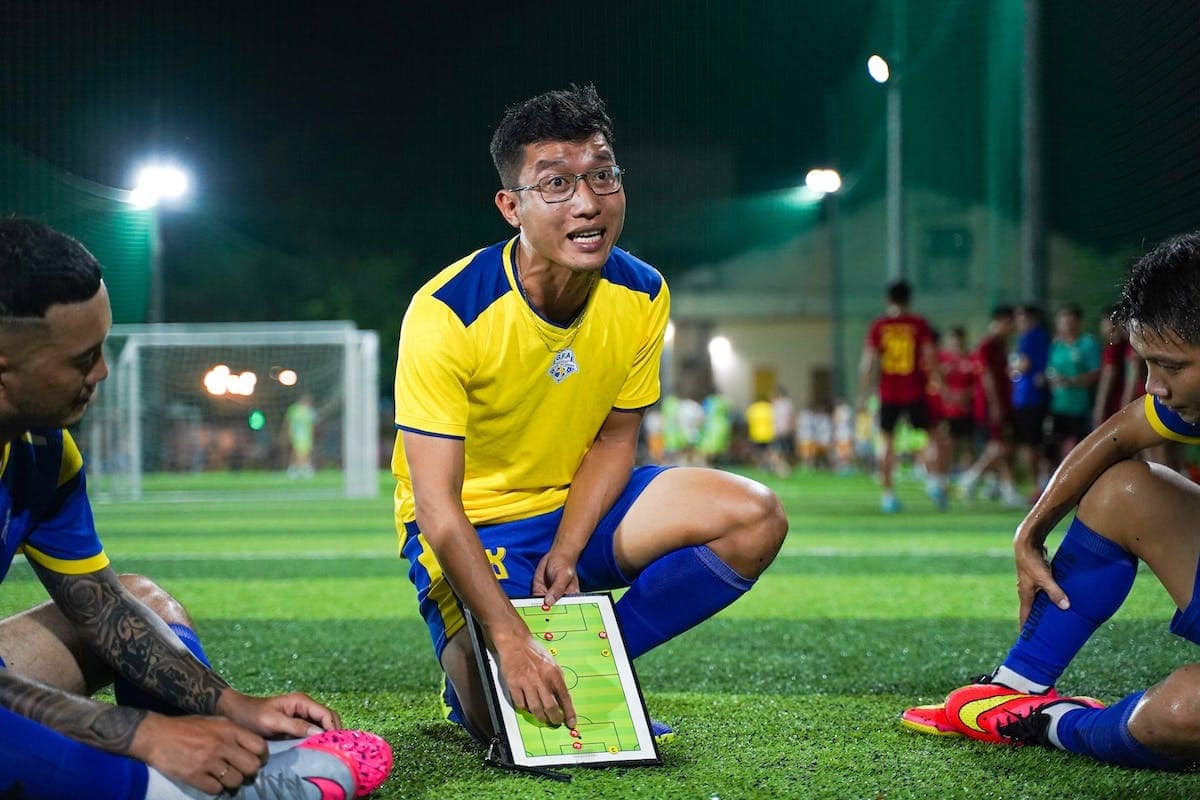
Winning tactics to maximize results
In the realm of football, tactical strategies are essential to optimize a team’s performance. They allow for the establishment of a coherent game plan tailored to the specifics of each match.
The first tactical strategy to consider is the defensive strategy. This involves organizing the team in such a way that it can control its own territory while neutralizing opposing attacks. To do this, it is crucial to establish a solid defensive line made up of disciplined and focused players. Good communication between defenders is also essential to anticipate opposing offensive movements and quickly cut off their actions.
At the same time, the offensive strategy aims to create scoring opportunities. It requires precise coordination between all areas of play: forwards, midfielders, and even defenders who join in offensive phases. The main idea is to use different collective combinations to surprise the opposing team and disrupt their defensive structure.
Another strategy often employed is the counter-attack. This method involves taking advantage of the spaces left open by the opposing team when they attack to make quick transitions to an offensive action. Counter-attacks require great speed in execution as well as excellent game reading to make the most of these opportunities.
The pressing strategy, on the other hand, relies on constant pressure exerted on opposing players as soon as they gain possession of the ball. The goal is to prevent the opposing team from building their game and force them to make technical or tactical errors. Pressing requires great physical condition and perfect coordination among all players to be effective.
The triangle play strategy can also be used to optimize a team’s performance. It is based on the principle of using triangles formed by three players to facilitate short and quick passes, as well as collective movements. This strategy promotes ball retention and allows for better game control.
It is important to note that these different strategies can be combined within the same match depending on the specific needs encountered. Each team must therefore choose those that best match its strengths, weaknesses, and the opponent it faces.
Optimizing the performance of a football team inevitably involves implementing judicious tactical strategies. These must take into account both the characteristics of the team and those related to the opponents encountered during matches. Flexibility and adaptability are therefore essential to gain a decisive advantage on the field.
Player selection and management for victory
Once the tactical strategies are established, collective game actions are needed. When everyone works together towards a common goal, it enhances their overall effectiveness.
The management of the squad also involves having a long-term vision and not just for a single match. It may happen that a key player is tired or injured, so there need to be effective substitutes ready to step in. Squad depth ensures continuity and prevents potential drops in performance.
Player management also includes their physical and medical monitoring. Coaches are assisted by physical trainers and doctors who ensure that players maintain their best possible physical condition while minimizing the risk of injuries.
The selection of players and the management of the squad are therefore two essential elements to ensure a competitive and high-performing team in the world of football. A wrong decision can have a significant impact on the course of the match as well as on the overall confidence of the players. That is why these choices must be made meticulously, taking into account all relevant parameters to optimize the chances of success during sporting encounters.
Essential rules and principles for optimal play
The main rules and principles of play are fundamental elements for a football team. Each player must be familiar with these rules to ensure a fluid and fair game.
You must understand the offside rule. According to this rule, a player is considered offside if they are closer to the opponent’s goal line than the ball and the second-to-last defender at the moment the ball is passed to them by a teammate. This rule aims to prevent opportunistic attacks from advantageous positions.
It is essential to master the concepts related to fouls and sanctions. Fouls can lead to direct or indirect free kicks as well as yellow or red cards depending on their severity. Referees ensure strict adherence to the rules of the game to guarantee fairness between the two teams.
Fair play is also a key principle in football. It encourages all players to play fairly, without cheating or intentionally trying to injure their opponents. Mutual respect among players greatly contributes to maintaining the integrity of the sport.
Another important aspect concerns communication on the field. Good communication among teammates allows for the establishment of effective strategies, anticipation of opposing movements, and harmonious coordination of all collective actions.
Tactical discipline plays a crucial role in a team’s success. Each player must know their specific role on the field and be able to adapt to the tactical changes decided by the coach. Cohesion among players is essential to ensure a solid organization during the various phases of the match (attack, defense, transitions).
The essential rules and principles of play are indispensable for a well-structured football team. Mastery of these elements ensures a fluid, fair, and competitive game. Players must therefore familiarize themselves with them to be fully prepared before each sporting encounter.
Cohesion and communication: the unity of a team
Beyond the rules and main technical aspects, interactions and communication within the team are also of paramount importance to ensure optimal collective performance on the field.
In a team sport like football, communication is essential to allow players to understand each other and make the right decisions in real-time. Verbal exchanges among teammates are crucial for coordinating collective actions, conveying tactical instructions, or signaling the presence of a dangerous opponent. Smooth communication thus fosters better synchronization among all team members.
Communication is not limited to words. Gestures and non-verbal signals also have their place in the language of football. Knowing glances, well-executed calls for the ball, or specific movements can indicate an offensive or defensive intention to teammates. These visual signals can be particularly useful when it is difficult to hear on a noisy field or when some players speak different languages.
It is important to emphasize the significance of leadership within a football team. Indeed, it is necessary for a player to be capable of taking the necessary responsibilities and guiding their teammates during a match. The leader must be able to give clear instructions while being respectful towards their peers to ensure harmonious cohesion.
Mutual trust is also a determining factor in a high-performing team. Each player must trust their teammates and their individual skills. This trust allows for playing with more confidence, taking calculated risks, and establishing bold strategies.
It is worth noting that interactions within a football team are not limited solely to matches. The moments spent together during training, travel, or even in the locker room strengthen the cohesion of the group. These moments foster the establishment of a true collective dynamic that can prove decisive during sporting encounters.
A high-performing team relies on effective and harmonious communication among its members. Players must be able to convey their ideas quickly and clearly while being attentive to others. Good interaction and a strong team spirit greatly contribute to collective success on the field.
Training and physical preparation: keys to success
In a sport as physically demanding as football, training and physical preparation are essential elements for individual and collective performance. Players must be able to provide intense efforts throughout the match, which requires optimal physical condition.
Regular training allows footballers to develop their endurance, muscle strength, and explosiveness. Cardiovascular exercises such as variable intensity runs, intervals, or long-distance endurance sessions help improve players’ endurance on the field. The ability to maintain a high pace throughout the match is crucial to perform until the last minute.
Muscle strength is also paramount in football. It enables players to withstand physical contact with opponents, be more powerful in aerial duels, or shoot with more force. During training sessions in the gym or on the field, footballers often perform targeted exercises aimed at strengthening their muscles, particularly in the legs and core.
Beyond fundamental physical aspects, balance and coordination are also worked on during specific sessions. These skills are essential in the game where one must be able to quickly chain different technical actions while maintaining bodily balance.
In addition to cardiovascular and muscular aspects, special attention must be paid to the players’ flexibility. Regular stretching helps prevent injuries and optimize joint mobility, thereby promoting better quality of play.
Nutrition also plays a crucial role in the physical preparation of footballers. A balanced diet tailored to the specific nutritional needs of the sport helps improve performance by providing the necessary energy before, during, and after exertion. Essential nutrients such as proteins, complex carbohydrates, and unsaturated fatty acids are prioritized to support energy metabolism and promote muscle recovery.
Rest is just as important as training itself. Footballers must pay particular attention to their recovery to avoid any risk of overtraining or injury due to accumulated fatigue. Sufficient sleep, active relaxation (such as massages), and regular rest periods are integral to the overall process of a player concerned with reaching their full potential on the field.
Physical training is of paramount importance in the modern world of football. It allows players not only to improve their individual capabilities but also to enhance their collective cohesion by working together towards a common goal: to win every match with excellence.