In Yvelines, the time has come for the modernization of education. The colleges in the department are embarking on a digital transformation aimed at enriching the educational experience of young students. The adoption of advanced digital tools is at the heart of this shift, promising to make learning more interactive, personalized, and accessible. This initiative aims not only to equip classrooms with the latest technology but also to train teachers in the pedagogical integration of these resources. The goal is to prepare middle school students to navigate easily in an increasingly digitized world.
Digital tools serving pedagogy in Yvelines colleges
Since 2015, the Department of Yvelines has launched an ambitious Digital Plan for Colleges. Ose Yvelines takes the leap into an educational era where pedagogy is revisited and strengthened through the judicious integration of digital tools. This commitment is reflected in appropriate equipment and adequate training for educational stakeholders, ensuring a constant upgrade of the teaching staff and a continuous optimization of teaching methods. Yvelines colleges are becoming ecosystems where tablets, interactive boards, and online resources serve as the new slates of knowledge.
The impact of educational technologies on learning and school inclusion is already being felt. Indeed, the Seine-et-Yvelines Numérique entity has deployed over 11,000 Mobile Individual Devices, benefiting around 10,000 students and 1,000 teachers. This massive distribution of customizable and interactive tools meets diverse educational needs, promoting equitable access to educational resources and breaking down the barriers of traditional learning. The use of these mobile devices in classrooms and beyond fosters a more inclusive, engaging, and adaptive pedagogy, addressing the challenges of a constantly changing society.
The commitment of the Department of Yvelines to the Digital Plan raises major issues regarding the preparation of young minds for the digital age. It is about cultivating essential skills in middle school students for their professional and civic futures. Beyond acquiring traditional knowledge, the challenge is to introduce them to mastering digital tools, critical thinking in the face of information, and virtual collaboration. These skills, once ingrained, will serve as the foundation for an education that is dynamic, adapted, and resolutely forward-looking.
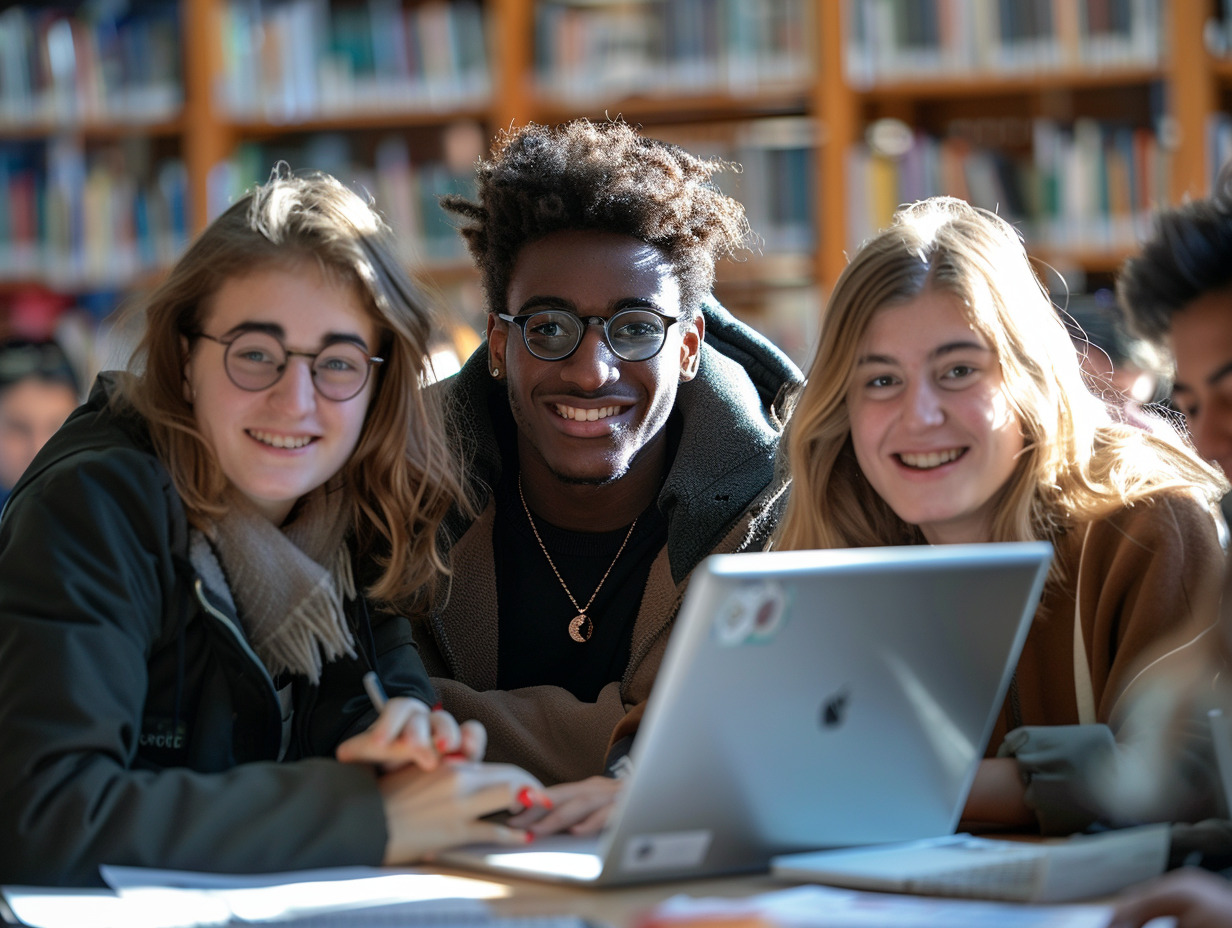
The impact of educational technologies on learning and school inclusion
The integration of educational technologies in Yvelines colleges has a strategic dimension in transforming teaching and learning practices. By providing mobile devices and other digital tools, the actors of the Digital Plan orchestrated by the Department of Yvelines aim to enhance school inclusion. The initiative led by Seine-et-Yvelines Numérique has materialized through the distribution of over 11,000 individual mobile devices, directly impacting 10,000 students and 1,000 teachers. The scope of this action extends well beyond mere technological upgrades of institutions; it aims to open the doors to diverse and personalized learning.
The question of digital impact on education is no longer a matter of conjecture. Data collected in institutions show a positive correlation between the use of digital tools and improved academic performance. Students, equipped with tablets and access to a plethora of online resources, are more inclined to develop autonomous research and information processing skills. This renewed approach to pedagogy encourages active participation from students and fosters better knowledge assimilation. Teachers, thanks to these new resources, can adapt their pedagogy to the individual needs of each student, thus promoting equal opportunities within the educational system.
The Department of Yvelines, aware of the challenges related to education in the digital age, has taken measures to ensure that learning is not only about the transmission of knowledge but also about social integration and preparation for digital citizenship. Implementing a pedagogy that integrates digital tools reflects a desire to support middle school students in acquiring essential skills for their future professional and personal environments. This proactive approach demonstrates the department’s commitment to forging an education that prepares young people to integrate smoothly into a society where digital technology plays a predominant role.