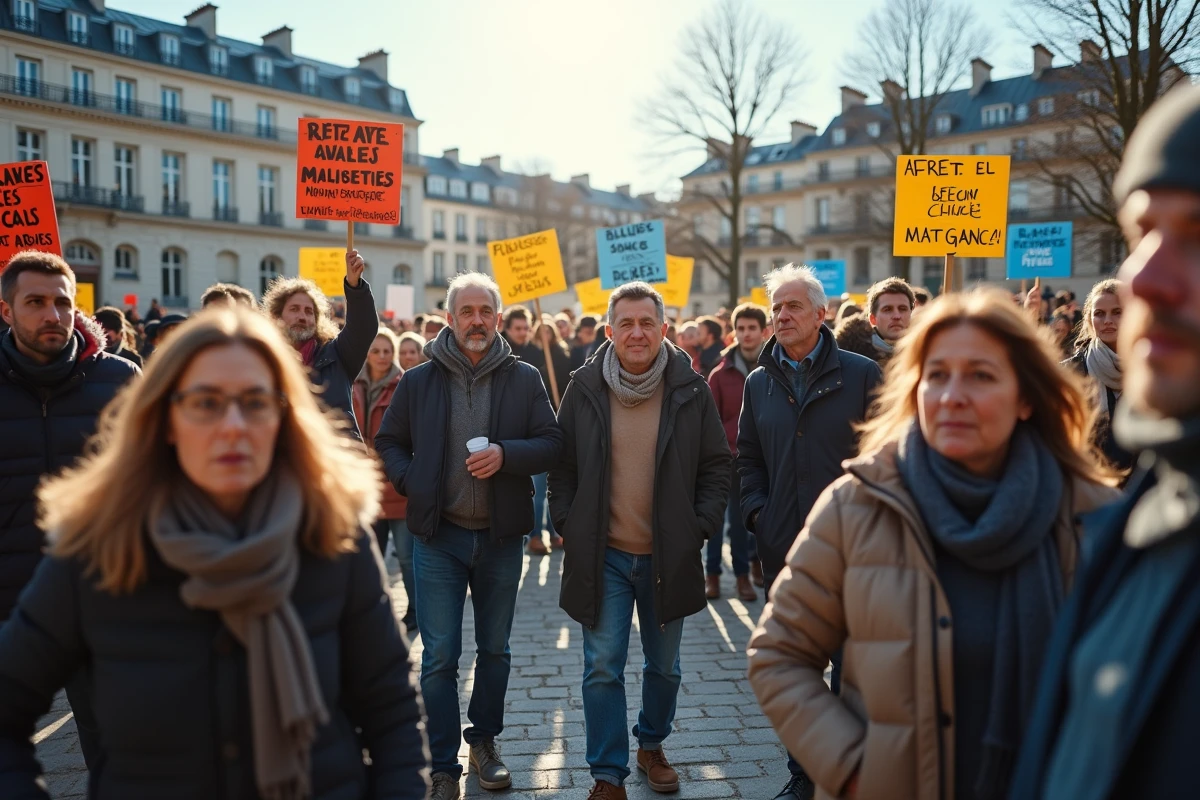
When looking at the French political landscape, one observation often comes up in local discussions, at markets, or in association meetings: the offerings of traditional parties leave a blind spot regarding national sovereignty issues. This gap has opened up space for citizen movements that are trying to structure a concrete response, rooted in the daily lives of the French people.
Food and Agricultural Sovereignty: The Ground Where Everything Happens
There is much talk of sovereignty in abstract terms, but for French farmers, the question arises every season in very concrete ways. European standards, free trade agreements, and price pressures create a vise that reduces the margins of farms.
Citizen sovereignist movements distinguish themselves from traditional parties on this point: they start from grassroots feedback. Rather than drafting a program from Paris, some collectives organize meetings directly on farms to gather real constraints.
This approach is documented on lespatriotes.net, where positions on agricultural policy and food security occupy a central place in the movement’s discourse. The defense of farmers against free trade agreements appears as a structuring axis, not just a campaign argument.

Citizen Participation in France: Beyond Voting
The collective work French Democracy in Distress (Palgrave Macmillan, 2025) places France in an intermediate position among the democracies studied. The problem perceived by citizens is therefore less about a rejection of the democratic system than about a blockage of concrete participation channels.
The increase in participation during the early legislative elections of 2024 confirms this reading. When voters believe that their vote can genuinely influence the political outcome, they turn out. Disengagement is not a fatality; it is the logical response to a feeling of powerlessness.
The citizen movements defending sovereignty in France seek to bridge this gap between political offerings and expectations. Several mechanisms are carried by these collectives:
- Regular local assemblies where members vote on the movement’s priorities, without partisan filters
- Proposals for citizen-initiated referendums on foreign policy and social rights issues
- Transparency on funding, in opposition to the opaque practices attributed to major parties
These mechanisms do not solve everything. Feedback varies by territory, and some collectives struggle to move beyond the stage of the activist circle. Structuring remains a challenge.
Why the Question of Law Keeps Coming Up
A citizen sovereignist movement does not just protest. It proposes specific legislative changes. The question of law, particularly the hierarchy between national law and European law, forms the ideological foundation of these organizations.
Regaining control over the laws that govern the daily lives of the French: this is the formulation that comes up most often in public meetings. We are not talking about a brutal break, but about a rebalancing between decisions made in Brussels and those made by the French government and Parliament.
Security and Justice: Demands Rooted in Local Experience
When supporters of these movements are questioned, security consistently ranks among the top three concerns. Not security in the geopolitical sense, but everyday security: burglaries, assaults, feelings of abandonment in certain rural or suburban areas.
Justice is perceived as disconnected from the ground. Sovereignist movements carry concrete proposals on this subject: strengthening the resources of local justice, minimum sentences for certain offenses, revaluing the status of law enforcement.
We can discuss the effectiveness of each measure. What distinguishes these collectives is that they start from documented local incidents, not from abstract national statistics. A news item in a municipality becomes the starting point for a proposal, which is then relayed at the movement’s scale.

Social Policy and Prices: An Angle Absent from Partisan Debate
Sovereignty is not just a matter of borders or treaties. For a significant portion of the French population, it translates into a direct question: why are prices rising while wages stagnate?
Citizen sovereignist movements explicitly link social policy to choices in European economic policy. Their argument: as long as France does not control its fiscal and monetary levers, social protection remains fragile.
This framework is not new, but it resonates anew in a context where purchasing power dominates opinion polls. The gatherings organized by these collectives attract an audience that does not identify with either the social-democratic left or the liberal right.
A Positioning Against the Gathering of the Right
The division between Renaissance and National Rally is not enough to situate these movements. Their discourse claims independence from any existing formation.
This stance complicates their electoral visibility but gives them a freedom of speech that established parties no longer have. The president of the movement does not have to arbitrate between internal currents: the line is set by the members, based on regular consultations.
Recent experience shows that the electoral remobilization of 2024 benefited those who offered a clear framework. Sovereignist collectives that structure their proposals around law, security, and social policy have a real niche, provided they do not replicate the pitfalls of the organizations they criticize.